
Published: Feb 12, 2026|Updated: Feb 20, 2026
N-400 Fee Waiver: Who Qualifies and How to Apply
You may not have to pay the $760 filing fee. This guide covers who qualifies for a fee waiver or reduced fee, and how to apply.

By Alicja
Applying for U.S. citizenship costs $760 when you file Form N-400 by paper ($710 online). That's a lot of money. But if your income is low enough or you receive certain government benefits, you can pay nothing at all or cut that fee in half.

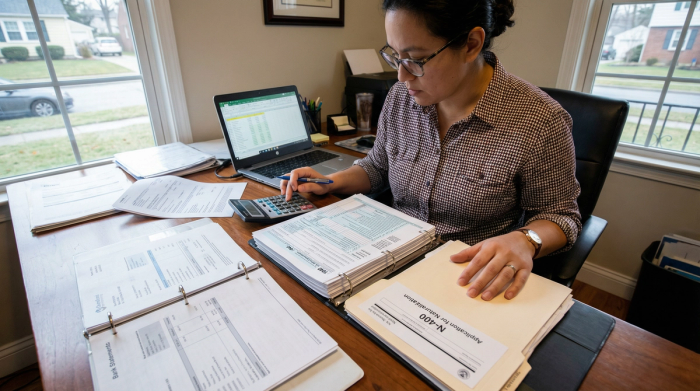
What Is the N-400 Fee Waiver?
A fee waiver lets you file Form N-400 without paying the $760 filing fee. We see a lot of clients skip this option because they assume they won't qualify — but many do. USCIS gives you two options:
Both options require paper filing. You can't file N-400 online and request a fee waiver or reduced fee at the same time. This catches a lot of people off guard.
Important: Since April 1, 2024, the N-400 fee includes biometric services (there is no separate biometrics fee). And as of October 28, 2025, USCIS generally no longer accepts paper checks or money orders for paper-filed forms; payments must be made electronically unless you qualify for an exemption.
If you're new to the citizenship application process, start with our complete N-400 guide which walks you through every step from eligibility to interview.
Three Ways to Qualify for a Fee Waiver
Under 8 CFR § 106.3, there are three ways to get the full filing fee waived.
Pathway 1: Receiving a Means-Tested Government Benefit
If you currently receive any of these benefits, you qualify. This is the easiest path:
- Medicaid (but NOT Medicare)
- Supplemental Nutrition Assistance Program (SNAP/food stamps)
- Supplemental Security Income (SSI)
- Temporary Assistance for Needy Families (TANF)
- Children's Health Insurance Program (CHIP/SCHIP)
- National School Lunch or Breakfast Program (free or reduced-price meals)
- Section 8 Housing or Public Housing Assistance
Don't confuse Medicare with Medicaid — this trips people up all the time. Medicare is federal health insurance for people 65+. It does NOT count. Medicaid is the state program for low-income individuals, and that one DOES qualify you.
Documentation required: You need a benefit award letter showing:
- Your name as the recipient
- The agency providing the benefit
- The type of benefit
- Current dates (within the past 12 months)
A benefit card by itself won't cut it. You need the actual award letter from the agency.
Pathway 2: Income at or Below 150% of Federal Poverty Guidelines
Don't receive any of those benefits? You can still qualify based on household income alone.
Below are the 2026 Federal Poverty Guidelines, effective January 13, 2026 (Federal Register). Fee waiver eligibility uses 150% of these figures.
48 Contiguous States and Washington D.C. (150% FPG): 1 person: $23,940. Add $8,520 for each additional person.
Alaska:
- 1 person: $29,925
- Add $10,650 for each additional person
Hawaii:
- 1 person: $27,540
- Add $9,795 for each additional person
How to count your household: Include yourself, your spouse (if living together), your unmarried children under 21 who live with you, and anyone you claim as a tax dependent. Roommates don't count unless you claim them as dependents.
Documentation required:
- Federal tax returns (IRS transcripts are preferred)
- W-2 forms
- Recent pay stubs
- Documentation of household size (birth certificates for children, marriage certificate)
Pathway 3: Financial Hardship
Income above 150% FPL? You might still qualify if paying the fee would cause genuine financial hardship.
Qualifying hardship circumstances include:
- Unexpected medical bills or ongoing high medical expenses
- Recent job loss or unemployment
- Eviction notice or homelessness
- Separation from spouse (and loss of their income)
- Being a victim of trafficking or domestic abuse
- Natural disaster affecting your finances
This one takes the most paperwork. You'll need to document:
- All sources of income
- All assets (retirement accounts, primary home, and one car are generally excluded from consideration)
- All debts and liabilities
- Monthly expenses
- Evidence of the specific hardship (medical bills, eviction notice, unemployment documentation)
- Affidavits from organizations helping you (if applicable)
If you're going the hardship route, don't submit a thin application. USCIS will reject it and you'll have to refile or pay the full fee.
Check Your Fee Waiver Eligibility
Not sure if you qualify? Our eligibility checker can help you understand your options before you start your application.
The Reduced Fee Option: Pay $380 Instead of $760
If your income is above 150% but at or below 400% of Federal Poverty Guidelines, you won't get a full waiver — but you can pay $380 instead of $760.
2026 Reduced Fee Income Limits (400% FPL):
How to request the reduced fee: The old Form I-942 is gone as of April 2024. Now you request the reduced fee in Part 10 of Form N-400 itself. Still paper-only, with the same income documents as the fee waiver pathway.
How to Apply: Step-by-Step Process
Step 1: Determine Your Eligibility
Check which pathway applies to you:
- Receiving a means-tested benefit? → Fee waiver via Form I-912
- Income at or below 150% FPL? → Fee waiver via Form I-912
- Facing financial hardship? → Fee waiver via Form I-912
- Income between 150-400% FPL? → Reduced fee via Part 10 of N-400
Step 2: Gather Your Documentation
For means-tested benefit pathway:
- Benefit award letter dated within 12 months
- Copy of the Form I-912
For income-based pathway (fee waiver or reduced fee):
- Most recent federal tax return or IRS transcript
- W-2 forms for all jobs
- Pay stubs from the past month
- Evidence of household members (birth certificates, marriage certificate)
- Form I-912 (for fee waiver) or complete Part 10 (for reduced fee)
For hardship pathway:
- All income documentation listed above
- Bank statements from the past 3 months
- Documentation of assets
- Documentation of debts (credit card statements, loan statements, medical bills)
- Evidence of your hardship circumstance
- Form I-912 with Part 3 completed
Step 3: Complete Your Forms
Download Form I-912 from USCIS. The current edition date is 07/22/25. USCIS also accepts prior editions or a written request.
Fill out Form N-400 per the official instructions. If you want the reduced fee instead of a full waiver, complete Part 10.
Warning: Don't include any payment info if you're requesting a fee waiver. If you put a credit card number in "just in case," USCIS may charge it instead of reviewing your waiver.
Step 4: Assemble and Mail Your Package
Your package should include (in this order):
- Form G-1145 (optional, for email/text notification of receipt)
- Form I-912 (if requesting fee waiver)
- Fee waiver supporting documents
- Form N-400
- N-400 supporting documents
- Two passport-style photos
Mail everything to the USCIS lockbox for your state (find your address). Send it via USPS Certified Mail with Return Receipt — you'll want proof it arrived.
Step 5: Wait for Your Fee Waiver Decision
USCIS doesn't publish a set processing time for fee waiver decisions, and wait times vary. If approved, your N-400 moves forward normally. If denied, you'll get a notice explaining why. At that point you can:
- Submit a new fee waiver request with additional documentation
- Pay the full fee and refile
- Pay the reduced fee if you qualify
Paper-filed applications take longer to get an initial receipt than online filing — sometimes 8 to 10 weeks. Processing times vary by field office, so check the USCIS Processing Times tool for current estimates.
Documentation Checklist by Eligibility Type
Means-Tested Benefit Checklist
- [ ] Form I-912 (current edition: 07/22/25)
- [ ] Benefit award letter dated within 12 months showing your name, benefit type, and agency
- [ ] Form N-400 (current edition)
- [ ] N-400 supporting documents (green card copies, photos, etc.)
Income-Based Fee Waiver Checklist
- [ ] Form I-912 (current edition: 07/22/25)
- [ ] Federal tax return or IRS tax transcript for most recent year
- [ ] W-2 forms for all jobs
- [ ] Pay stubs from past 30 days
- [ ] Documentation of household size (birth certificates, marriage certificate)
- [ ] Form N-400 (current edition)
- [ ] N-400 supporting documents
Financial Hardship Checklist
- [ ] Form I-912 with Part 3 completed
- [ ] All income documentation listed above
- [ ] Bank statements (past 3 months)
- [ ] Documentation of assets (retirement account statements, property records)
- [ ] Documentation of liabilities (credit card statements, loan documents, medical bills)
- [ ] Evidence of hardship (medical records, eviction notice, unemployment letter)
- [ ] Affidavits from helping organizations (if applicable)
- [ ] Form N-400 (current edition)
- [ ] N-400 supporting documents
Reduced Fee Checklist
- [ ] Form N-400 with Part 10 completed
- [ ] Federal tax return or IRS tax transcript
- [ ] W-2 forms
- [ ] Pay stubs from past 30 days
- [ ] Documentation of household size
- [ ] $380 payment (electronic payment methods only)
- [ ] N-400 supporting documents
Common Reasons Fee Waivers Get Denied (and How to Avoid Them)
USCIS approves roughly 84% of fee waiver requests, according to DHS data. That means about 1 in 6 gets denied. Most denials come down to a few avoidable mistakes:
1. Insufficient documentation
Don't just send a tax return and hope for the best. Include multiple forms of evidence — IRS tax transcripts carry more weight than self-prepared returns.
2. Using an outdated form edition
USCIS released a new Form I-912 on July 22, 2025. Check uscis.gov/i-912 for the current version before filing.
3. Missing certified English translations
Any document not in English must include a certified translation. This includes benefit letters and tax documents from other countries.
4. Unsigned forms
This sounds obvious, but it's surprisingly common. Sign and date both Form I-912 and Form N-400.
5. Filing Form I-912 separately from N-400
Your fee waiver request must be filed together with your N-400 in the same package. Don't mail them separately.
6. Including payment with your fee waiver request
If you include credit card information "as backup," USCIS may process the payment instead of evaluating your fee waiver.
7. Income above the threshold
If your household income exceeds 150% FPL, you don't qualify for a fee waiver. You may qualify for the reduced fee if you're under 400% FPL.
8. Not completing Part 3 for all household members
If you have multiple family members in your household, each person's information may need to be documented separately in Part 3.
What to Do if Your Fee Waiver Is Denied
A denial isn't the end of the road. You have a few options:
- Submit a new fee waiver request with stronger documentation addressing the reason for denial
- Pay the full $760 fee (or $710 online) and refile
- If you're close to the income limit, consider waiting until a change in circumstances (job loss, household size change) might qualify you
A fee waiver denial does NOT hurt your citizenship eligibility. It just means you need to pay the fee or submit a stronger application.
Ready to Start Your Citizenship Application?
Immiva helps you prepare your N-400 application with clear guidance every step of the way.
Frequently Asked Questions
Yes. Having a job doesn't disqualify you. What matters is your total household income compared to the poverty guidelines. If your income is at or below 150% FPL even while working, you qualify.
Generally, no. USCIS evaluates your citizenship application separately from your fee waiver request. However, during your naturalization interview, officers may ask about your financial situation as part of assessing good moral character. Having unpaid taxes or child support could be an issue, but using a fee waiver itself is not a problem.
The fee waiver decision time can vary. Once approved, your application follows the normal processing timeline. Paper-filed applications can take longer to get an initial receipt compared to online filing. N-400 processing times vary significantly by field office and workload, so check the USCIS Processing Times tool for the most current estimate.
No. This is a major limitation that surprises many applicants. If you want to request a fee waiver or reduced fee, you must file by paper. Online filing only allows full fee payment.
Medicare is federal health insurance primarily for people 65 and older. It does NOT qualify you for a fee waiver.
Medicaid is a state-administered program for low-income individuals. It DOES qualify you for a fee waiver.
This distinction trips up many applicants. If you receive Medicare, you'll need to qualify through income or hardship instead.
Only if you claim them as a tax dependent. Generally, household size includes: you, your spouse (if living together), your unmarried children under 21 who live with you, and anyone you claim as a dependent on your taxes. Roommates who pay their own way typically don't count.
This is a personal decision. Paper filing with a fee waiver takes longer to get a receipt (8-10 weeks vs. instant for online). If timing is critical, for example you have travel plans or need to meet a deadline, paying the fee and filing online might make sense. But if saving $760 is more important than speed, the fee waiver is worth the wait.
If you're over 150% FPL but under 400% FPL, you qualify for the reduced fee of $380. If you're over 400% FPL but face genuine financial hardship, you can try the hardship pathway with detailed documentation. Be prepared to explain exactly why paying the fee would cause severe financial difficulty.
2024-2026 Policy Changes You Need to Know
Fee waiver rules have changed several times since 2024. Here's what's different:
April 1, 2024: Major fee rule changes took effect (USCIS Fee Rule FAQ):
- Standard N-400 fee increased to $760 paper / $710 online
- Separate biometrics fee eliminated (now included in filing fee)
- Form I-942 discontinued (reduced fee now requested via Part 10 of N-400)
- Reduced fee eligibility expanded from 150-200% FPL to 150-400% FPL
July 22, 2025: H.R.-1 fee adjustments went into effect:
- New Form I-912 edition released (07/22/25)
- Applications using outdated forms are rejected
October 28, 2025: USCIS stopped accepting paper checks and money orders. Payments must now be made electronically.
January 13, 2026: Updated Federal Poverty Guidelines took effect. The income thresholds in this guide reflect these current numbers.
Official Sources
All information in this guide was verified against these official sources as of January 2026:
USCIS Resources
- Form I-912 (Request for Fee Waiver)
- Form I-912 Instructions
- Fee Waiver Information
- Reduced Fee Information
- Form N-400 (Application for Naturalization)
- USCIS Fee Schedule (Form G-1055)
- USCIS Poverty Guidelines
- USCIS Processing Times
- USCIS Policy Manual, Volume 1, Part B, Chapter 4
Federal Regulations
- 8 CFR § 106.3 - Fee waiver eligibility standards
- 2026 Federal Poverty Guidelines - HHS poverty guidelines
Additional Government Resources
- HHS Poverty Guidelines Overview
- DHS Fee Waiver Report - Fee waiver approval statistics
Immigration rules shift often. We update this guide whenever USCIS revises its fee policies or poverty guideline thresholds.
About Immiva
Simplifing Immigration Process
Resources
Contact
Disclaimer: Simple Immi LLC dba Immiva is not a lawyer or a law firm and does not engage in the practice of law, provide legal advice, or offer legal representation. The information, software, services, and comments on this site are for informational purposes only and address issues commonly encountered in immigration. They are not intended to be a substitute for professional legal advice. Immiva is not affiliated with or endorsed by the United States Citizenship and Immigration Services (USCIS) or any other government agency. Your use of this site is subject to our Terms of Use.
Copyright © 2025 immiva.com (Simple Immi LLC dba Immiva)