
Published: Feb 02, 2026
J-2 EAD and Social Security Number: Complete 2026 Guide
Get your SSN after receiving your J-2 work permit. March 2025 changed everything.

By Michal
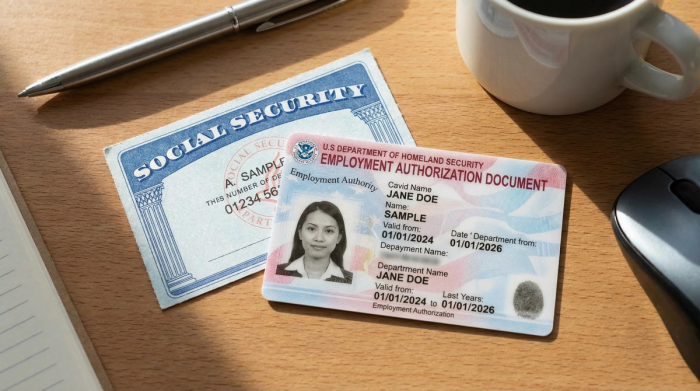
If you're a J-2 dependent with an approved EAD, getting your Social Security Number is your next step before starting work. The process changed significantly in March 2025 when the Social Security Administration paused automatic SSN issuance through USCIS. Now you must apply separately at an SSA office, adding 4 to 8 weeks to your employment timeline.

What Changed in March 2025
Before March 2025, J-2 EAD applicants could request a Social Security Number directly on Form I-765. USCIS would coordinate with SSA, and your SSN card would arrive shortly after your EAD. This was called Enumeration-Beyond-Entry (EBE).
That program is now suspended. If you filed Form I-765 after March 18, 2025, you cannot receive your SSN automatically through USCIS, even if you checked that box on your application (University of Pittsburgh OIS Notice).
This means every J-2 EAD holder must now apply for their SSN separately at a Social Security Administration office after receiving their EAD card.
Important: The EBE suspension affects all EAD categories, not just J-2. USCIS has not announced when this program will resume.
If you're still waiting for your EAD approval, use that time to understand the SSN process. You can check your J-2 EAD application status to estimate when you'll be ready to apply for your SSN.
Can a J-2 Visa Holder Get a Social Security Number?
Yes, but only with an approved Employment Authorization Document (EAD). The reason:
A Social Security Number is issued for employment and tax purposes. J-2 dependents are not authorized to work incident to their status. Unlike some visa categories where work authorization comes automatically, J-2 dependents must apply for and receive an EAD before they can legally work (8 CFR § 274a.12(c)(5)).
Without an EAD, you cannot get an SSN. The only exception is if you have another valid work authorization document or qualify for SSN through a different program (which is rare for J-2 holders).
If you haven't applied for your EAD yet, read our J-2 visa work authorization guide to understand the full process. Once you have your EAD in hand, you can apply for your SSN.
Documents You Need for Your SSN Application
The Social Security Administration requires specific documents to verify your identity, immigration status, and work authorization. Bring originals, not copies. SSA will return your documents the same day.
Required documents:
- Form SS-5 (Application for a Social Security Card). You can download Form SS-5 from SSA or complete it at the office.
- Valid passport showing your identity and citizenship.
- Form I-766 (Employment Authorization Document). This is your EAD card that USCIS mailed after approval.
- Form DS-2019 showing your J-2 status.
- I-94 Arrival/Departure Record. Print this from CBP's I-94 website.
Some offices may also request your birth certificate if available, though your passport typically satisfies this requirement.
Tip: Before visiting SSA, verify your documents are current. Your EAD must be valid (not expired), and your I-94 should show your current admission record. If your EAD is approaching expiration, see our J-2 EAD renewal guide.
Step-by-Step SSN Application Process
Since March 2025, all J-2 EAD holders must apply for SSN directly at a Social Security Administration office.
Step 1: Wait for Your EAD Card
You cannot apply for an SSN until you physically have your I-766 (EAD card) in hand. The receipt notice is not enough. SSA needs to verify your work authorization, and they require the actual card.
If you're waiting for your EAD, you can check your case status online using your receipt number.
Step 2: Locate Your Nearest SSA Office
Find your local Social Security office using the SSA Office Locator. Most offices require or strongly prefer appointments, though some accept walk-ins.
Step 3: Schedule an Appointment (Recommended)
Call 1-800-772-1213 to schedule an appointment. Wait times for appointments vary by location. Some offices are booking 2 to 4 weeks out, while others have availability within days.
If you need to start work urgently, ask about any cancellation openings or try visiting as a walk-in during off-peak hours (typically mid-week, early morning).
Step 4: Attend Your Appointment
Bring all required documents. The SSA representative will verify your identity, review your EAD and immigration documents, and submit your application.
The appointment typically takes 15 to 30 minutes if your documents are complete and SSA can verify your immigration status in their system.
Step 5: Wait for Status Verification
SSA verifies your immigration status with DHS through a system called SAVE (Systematic Alien Verification for Entitlements). This usually happens instantly, but sometimes takes longer.
If SSA cannot immediately verify your status, your application may be delayed 2 to 4 weeks while they complete manual verification.
Step 6: Receive Your SSN Card
Once your application is processed, SSA mails your Social Security card to the address you provided. This typically takes 7 to 10 business days after your appointment (assuming instant verification).
Your card will say "VALID FOR WORK ONLY WITH DHS AUTHORIZATION" since your work authorization is tied to your EAD, not your underlying visa status.
How Long Does the SSN Process Take?
The total timeline from SSA appointment to receiving your card depends on several factors:
Total expected timeline: 2 to 6 weeks from the day you're ready to apply (with EAD in hand) until you receive your SSN card.
Planning tip: If you have a job offer, let your employer know your timeline. Most employers are familiar with immigration-related delays and can begin onboarding paperwork while you wait for your SSN.
Can you start work without an SSN? Technically, yes. The Social Security Administration states that you can begin work before receiving your SSN, as long as you have work authorization (your EAD). You would need to provide your SSN to your employer once you receive it. However, some employers have policies requiring an SSN before starting.
What Type of SSN Card Will You Receive?
J-2 EAD holders receive a Social Security card that says:
"VALID FOR WORK ONLY WITH DHS AUTHORIZATION"
This notation indicates that your work authorization is temporary and tied to your immigration status. The SSN itself is permanent. Your number never expires. But your right to work depends on maintaining valid work authorization.
This card type is standard for J-2 EAD holders. It doesn't limit what jobs you can do. Any employer can accept this card along with your EAD as proof of work authorization for Form I-9 purposes.
From EAD Approval to Employment: Complete Timeline
Full timeline for J-2 dependents in 2026:
Plan ahead. If you're waiting for your EAD, use that time to prepare for the SSN process.
If you need your EAD faster due to urgent circumstances, you may be able to submit an expedite request. Just know that expedite requests are granted only in specific situations and are not guaranteed.
Common Problems and How to Avoid Them
SSA Can't Verify Your Immigration Status
This happens when SSA's SAVE system doesn't find your record or shows outdated information. Possible causes:
- Your EAD was recently issued and DHS databases haven't fully updated
- There's a data entry error in USCIS records
- Your passport or DS-2019 information doesn't match exactly
Solution: If verification fails, SSA will process your application manually. This takes longer but usually resolves within 2 to 4 weeks. Bring all supporting documents and be patient.
Your EAD Is About to Expire
Your SSN card is permanent, but you need a valid EAD to apply. If your EAD expires before you get an SSA appointment, you'll need to wait for your renewal approval.
Solution: Apply for your SSN as soon as you receive your EAD. Don't wait until your card is nearly expired. Note that since October 2025, J-2 EAD holders no longer receive automatic extensions while renewals are pending.
Wrong Address on File
SSN cards are mailed to your address on file. They are not forwarded, even if you've set up mail forwarding with USPS.
Solution: Make sure your address is current before applying. If you move after applying, contact SSA immediately to update your address.
Employer Needs SSN Before You Have One
Some employers insist on having your SSN before starting work, even though this isn't legally required.
Solution: Show your employer the SSA FAQ confirming you can work before receiving your SSN. Provide your EAD as proof of work authorization. Most employers will accommodate this once they understand the situation.
Ready to apply for your J-2 work permit?
Immiva helps J-2 dependents prepare and file Form I-765 correctly the first time. We guide you through every step.
Do J-2 EAD Holders Pay Social Security Taxes?
Yes. Once you have an SSN and begin working, you will pay Social Security and Medicare taxes (FICA) like any other worker. These taxes are withheld from your paycheck.
J-1 exchange visitors are often exempt from FICA taxes under the substantial presence test rules. But J-2 dependents working on an EAD do not automatically qualify for this exemption.
Whether you're exempt depends on how long you've been in the U.S. and your specific circumstances. Consult a tax professional if you're unsure about your tax obligations.
Note: Your J-2 income cannot be used to support the J-1 principal. This is a condition of J-2 employment authorization under USCIS Policy Manual, Vol. 2, Part D, Ch. 6. You can use your income for personal expenses, savings, or supporting dependents, but not to fund the J-1 holder's exchange program activities.
What Happens to Your SSN If Your J-1 Spouse Changes Status?
Your Social Security Number is permanent. It never expires or gets revoked. Once you have it, it's yours for life.
However, your right to work depends on having valid work authorization. If the J-1 principal changes to a different status (like H-1B), your J-2 status ends, and your J-2 EAD becomes invalid immediately.
Your SSN remains valid for tax and identification purposes, but you would need new work authorization to continue employment. This might mean:
- Changing to H-4 status and applying for an H-4 EAD (if eligible)
- Finding an employer to sponsor you for your own work visa
- Leaving employment until you obtain new work authorization
If your J-1 spouse is considering a status change, plan ahead for how it affects your employment situation.
Frequently Asked Questions
No. SSA requires proof of work authorization, and for J-2 dependents, that means your physical EAD card. The I-765 receipt notice or approval notice is not sufficient. You must wait until your I-766 (EAD card) arrives before visiting SSA.
The SSA does offer an online SSN application, but it has limitations for noncitizens. Most J-2 EAD holders need to apply in person because SSA needs to verify original immigration documents. You can complete Form SS-5 online before your appointment, but you'll still need to visit an office.
Unlike USCIS, SSA doesn't have an online case tracker for SSN applications. If you haven't received your card within 2 weeks of your appointment, call SSA at 1-800-772-1213 or visit your local office to check status.
No. Your Social Security Number is permanent. It never expires. What expires is your work authorization (your EAD). When your EAD expires, you lose the right to work, but your SSN remains valid for tax purposes and personal identification. When you renew your EAD, your existing SSN continues to work.
Yes, if your child has an approved EAD. J-2 minor children (under 21) can apply for their own EAD and subsequently their own SSN following the same process. See our J-2 EAD FAQ for more information on children's work authorization.
You can request a replacement card from SSA. If your work authorization is still valid, you'll receive the same type of card. You're allowed up to three replacement cards per year and ten over your lifetime, with some exceptions.
Yes. Legally, you can begin work as soon as you have valid work authorization (your EAD). You don't need to wait for your SSN card. However, you must provide your SSN to your employer once you receive it. Some employers have their own policies requiring SSN before starting, so clarify this with your specific employer.
No. Your SSN doesn't change when you renew your EAD. You don't need to notify SSA or get a new SSN card when you receive a renewed EAD, unless your card type needs to change (which is rare for J-2 holders staying in the same status).
Check your J-2 EAD eligibility
Not sure if you qualify for J-2 work authorization? Our free eligibility checker tells you in minutes.
Key Takeaways
- J-2 dependents can only get an SSN after receiving an approved EAD
- Since March 2025, you must apply for SSN separately at an SSA office. Automatic issuance through USCIS is suspended.
- The SSN application process takes 2 to 6 weeks after you have your EAD
- Your SSN is permanent and never expires, even when your EAD expires
- Plan for 4 to 9 months total from filing your I-765 until you can start employment with an SSN
If you haven't applied for your J-2 EAD yet, start with our eligibility checker to make sure you qualify. Once approved, use this guide to get your SSN as efficiently as possible.
Have questions about your specific situation? Contact us and we'll help point you in the right direction.
Official Sources
This guide is based on current USCIS and SSA policy. All information was verified against these official sources as of January 2026:
Social Security Administration Resources
- Form SS-5 (SSN Application)
- SSN for Noncitizens Document Requirements
- Social Security Card Types
- SSN Processing Time FAQ
- Enumeration-Beyond-Entry Program
- SSA Office Locator
USCIS Resources
- Form I-765 Instructions
- USCIS Policy Manual, Vol. 2, Part D, Ch. 6 - Employment Authorization for J-2 Dependents
- Form I-9 Employment Eligibility Verification
Federal Regulations
- 8 CFR § 274a.12(c)(5) - Employment Authorization Categories
- 22 CFR Part 62 - Exchange Visitor Program
Immigration law changes frequently. We monitor USCIS and SSA policy updates and revise this guide when regulations change.
About Immiva
Simplifing Immigration Process
Resources
Contact
Disclaimer: Simple Immi LLC dba Immiva is not a lawyer or a law firm and does not engage in the practice of law, provide legal advice, or offer legal representation. The information, software, services, and comments on this site are for informational purposes only and address issues commonly encountered in immigration. They are not intended to be a substitute for professional legal advice. Immiva is not affiliated with or endorsed by the United States Citizenship and Immigration Services (USCIS) or any other government agency. Your use of this site is subject to our Terms of Use.
Copyright © 2025 immiva.com (Simple Immi LLC dba Immiva)